Friday, November 18, 2005

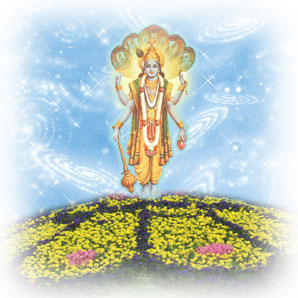
Prayer to Guru Rinpoche


The Prayer for Swift Accomplishment of All Wishes

Eh Ma Ho


In the pollen bed on a stalk of a lake-born lotus,

Divine being of the spontaneous five wisdom bodies,

Self-arising great Pema together with your consort

and rows of Dakinis massing like clouds, we supplicate you.

Bless us with the swift accomplishment of all our wishes.


By our recalling your presence,
Please completely exhaust the fully matured results of negative
acts—disease, disasters, obstructions, war, and poverty.

We beseech you from our hearts, Lord of Oddiyana.

Bless us with the swift accomplishment of all our wishes.


Well-practiced in faith, ethics, and generosity,
In liberating the mind stream through hearing,

In acknowledging shame, considering others,

and in wisdom--these seven riches of enlightened beings
and all accumulated necessities having entered

the mind stream of all beings,

Please ensure all the world to be happy and joyful.

Bless us with the swift accomplishments of all our wishes.


In all life-threatening situations where we are harassed
By ghosts, evil-doers, and negative spirits,

By fear of fire, flood, vicious animals, and dangers on the road,

Whatever unwanted suffering and illness appears,

We have no refuge or hope other than you.

Please look upon us with compassion, Guru, Lord of Oddiyana.

Bless us with the swift accomplishment of all our wishes.


MAY ALL BEINGS BENEFIT!


The Prayer for Swift Accomplishment of All Wishes is a treasure composed by Guru Rinpoche and discovered by Jigme Linpa. It was transmitted instantly and without hesitation, for the benefit of all suffering beings, by the Venerable Lama Lodu Rinpoche of Kagyu Droden Kunchab in San Francisco, from his memory and out of great necessity, on the occasion of the shocking and frightful attack upon the United States by unknown terrorists, September 11, 2001. It was translated by Rinpoche's devoted disciple, Jinpa Tharchin, on the next day.

Guru Rinpoche


DUSUM SANGYE Prayer

Buddha of the Three Times

Tibetan:

Dusum Sangye Guru Rinpoche
Ngodrub Kundag Dewa Chenpo Shab
Barchey Kunsel Dudul Dragpo Tsal
Solwa Debso Jingyi Labtu Sol
Chinang Sangwey Barchey Shiwa Dang
Sampa Lhungyi Drubpar Jingyi Lob

English:

Guru Rinpoche, Buddha of the three times,
Lord of all siddhis who is the one of great bliss,
Dispeller of all obstacles, wrathful tamer of Mara,
We supplicate you; please grant your blessings.
Grant your blessings that outer, inner
and secret obstacles be pacified
And that our intentions be spontaneously accomplished

Tuesday, August 23, 2005

Believe, you are made to.


You are not the I AM, the I AM is you.

In other words, your person Alias is not the cause of I AM,
the I AM is the cause of your person Alias.

So, Alias is not the I AM controlling the world.

While you think you imagine and dream,
that's your I AM who imagines and dreams.
And your I AM imagines you imagining
and dreams you dreaming.

So your freedom is just imaginal
because the imaginer wants you to imagine yourself free.
But you are not free.
At all times is him imagining through you,
at all times is him the one free.
That's how he, the I AM, is one in universal concert.

Though it is true: whatever you can imagine, that can be.
Because it is him, the I AM, who is actually imagining it.

Neville says: God is the author of good and bad.
There's no other source, no other author or cause.

And he says that all things make sense at the end.

So when the dream is over, bliss and joy remain.

We are all one man, one being, I AM.

No possible conflict, except in appearance.

The consciousness of your freedom
awakes in you the awareness of your true being.
The use of the Law implies that consciousness.
That's Jesus or the plan of redemption.
How the I AM has established the path back home.
Not that you are free, but that you believe it.
Since believing it, you are being attracted.
You are being called by the source, the I AM,
to awaken beyond this dream, on your royal seat,
from where you, who you really are, have dreamt it all.

You are being done, you are being made to do.
You are being thought, you are being made to think.
You are being desired, you are being made to desire.
You are being called, you are being made to believe.

All is God.
All is God.

He is you.

All is good.
All is good.

All is one.

Wednesday, August 03, 2005

Art of Living


To create, believe your thoughts.
To know, think your beliefs.

To realize, transcend thoughts and beliefs.

That is: think, believe, transcend.

Religion is belief.
Science is thought.
Realization is being awake.

Action through belief.
Vision through thought.
Wisdom through awareness.

Belief without thinking is fanaticism.
Thinking without belief is limitation.
Use both -heart and brain- dynamically.

Real-I-ze that which is
...beyond words
...beyond attachment
as your own consciousness
as your own beingness
as your own I AM-ness.

Then go on
free
knowing beyond thought
believing beyond belief
seeing, creating
all-ways transcending
into the Infinite of all that is.

That is the art of living
timeless existence
boundless light.

Amito Fo!

Friday, July 15, 2005

Vivir sensiblemente


DZEVAD KARAHASAN,
PROFESOR DE DRAMATURGIA, ENSAYISTA Y ESCRITOR
"Solemos pretender ser lo que no somos"


Me gustaría que usted pudiera ver cómo se entrega Karahasan cuando habla, con qué ilusión. Él tiene razón..., tocar, oler, mirar; escuchar al otro con todo tu cuerpo. Y dejar las ideas en la maleta. Nos sobran ideas y nos falta realidad. Sólo uno mismo puede dar contenido a lo que ocurre, pero para eso hay que sentir con respeto, es decir, sin apriorismo, abiertos, porque... "siempre estamos simulando algo, pretendiendo algo". Este profesor de drama, escritor de premiadas obras, ensayos y novelas, está considerado uno de los más lúcidos intelectuales de Europa. En ´Sarajevo. Diario de un éxodo´, que acaba de publicar en España Galaxia Gutenberg y Círculo de Lectores, habla de todos esos sentimientos que afloran cuando vivir consiste en sobrevivir.

Tengo 52 años. Nací en Duvno (Bosnia), pero he vivido en Sarajevo. Estoy felizmente casado. Soy licenciado en Literatura Comparada y Ciencias del Teatro. Soy un cristiano socialista. Cada uno de nosotros depende de los demás. Todo lo importante nos lo regalan, así que soy un individualista solidario consciente de su propia imperfección

IMA SANCHÍS - 15/07/2005


-¿Ha dudado alguna vez de que la vida es un regalo?

-Yo dudo continuamente, pero me autoconvenzo una y otra vez de que cada uno de nosotros sólo se hace a través del contacto con los demás. Nuestra piel nos separa del mundo, pero al mismo tiempo nos une con las personas a las que amamos.

-¿A quién ha amado usted?

-En mi infancia la persona más importante del mundo era mi hermano mayor. En mi localidad no había electricidad. Mis hermanos hacían sus deberes a la luz de una lámpara de petróleo. Había sobre la mesa un círculo luminoso, todo lo demás era penumbra.

No me dejaban acercarme, molestaba, pero mi hermano me ponía sobre sus hombros.

-¿Le llevó a la luz?

-Sí, y eso fue determinante. Gracias a él descubrí la dependencia humana.

-¿Quién hubo es su juventud?

-Un tío herrero que me enseñó a pensar con las manos. La mano es inteligente, tiene conocimiento. A través de la cabeza sólo se puede generar una forma mecánica. Es en la armonía de las manos y la cabeza como se consigue crear una forma orgánica.

-Vale para las manualidades, ¿y el trabajo intelectual?

-Al escribir también pienso con la mano.

Fíjese en un buen futbolista: su pierna piensa, si lo hiciera con la cabeza sería lento y aburrido.Un buen actor piensa con todo su cuerpo.De eso trata el ascetismo, del conocimiento a través de la experiencia.

-Siga hablándome de amor.

-El lugar más maravilloso del paraíso es la mujer. Los jardines y las mujeres tienen que ser percibidos con los cinco sentidos, experimentarlos con los sentidos interiores y exteriores.

-¿La mayor lección que le ha dado la vida?

-Cuando le dices a una persona "te necesito", hay en esa afirmación una verdadera grandeza y una gran fuerza.

-Creía que la dependencia era negativa.

-Porque en un mundo que se reduce a un único valor, el dinero; un mundo en que el amor, la familia y el conocimiento son banalizados porque no se puede sacar provecho

-Y usted cree que no.

-Hay malas formas de dependencia, pero también hay maravillosas. ¿Hay algo más sublime que la dependencia mutua de los amantes o de un niño por su madre? En Sarajevo, en medio de la guerra, yo era muy consciente de mi propia existencia porque había un par de personas que pensaban en mí.

-Es importante valorarlo.

-Otro aprendizaje fue la solidaridad. Una persona puede articularse a sí misma en la medida en que, de forma transitoria, se autoproyecte en otra persona y sienta como algo propio la necesidad y el sufrimiento del otro. Cuando uno está en la silla del dentista sólo puede gritar, pero reconoce el sufrimiento cuando ve sufrir a otro a quien quiere.

-Está hablando de conciencia.

-Sí. Mi trabajo en el teatro me ha dado otra lección: en el drama, unos a otros se determinan. Yo soy yo porque tú eres tú, y tú eres tú porque yo soy yo.

-¿Es aplicable a la vida?

-Absolutamente. Ahora yo hablo sólo para usted, sólo esta vez, y sólo en este lugar. Si usted fuera otro, la relación cambiaría. La objetividad no significa indiferencia. Inconscientemente, siempre nos adaptamos a la persona que tenemos delante. Vivimos con el otro y el juego es siempre recíproco.

-¿No le ha decepcionado el ser humano?

-En realidad, no. He sufrido momentos terribles en los que pensé que el ser humano es la bestia más espantosa. Y efectivamente lo es. Pero también hubo experiencias bellas.

Hubo personas que vinieron a Sarajevo simplemente para estar con nosotros.

-¿La guerra le ha cambiado?

-Me ha despertado la capacidad de jerarquizar determinados impulsos. Por ejemplo: antes, si alguien pegaba a un niño, me volvía loco contra la persona. Ahora prefiero intentar consolar al niño y me juro a mí mismo que yo nunca lo haré.

-Eso es constructivo.

-Sí, reconozco mis propios vicios en los otros, soy mucho más tolerante. Y, como es sabido, nuestras propias debilidades vistas en los demás nos irritan especialmente. Uno aprende también que las verdaderas necesidades se han de distinguir de las aparentes.

-No es fácil.

-Nuestro mundo consumista ha sido muy hábil en crear y desarrollar una serie de necesidades que hay que aprender a eliminar. Durante un año viví sin electricidad, sin calefacción, con muy poco alimento y agua. Y juro que había instantes de verdadera felicidad.

-¿Qué es lo mejor que podemos dar al otro?

-Nuestra atención. Lo que yo añoro más en nuestro mundo actual es la atención frente a nuestro interlocutor. Yo soy un conversador y escucho con mucha atención. Y cada vez más me sucede que mi interlocutor siente un cierto malestar ante mi mirada atenta. Entonces le tengo que explicar que no siento ningún interés por sus ideas, sino por él.

-Lo descoloca, claro.

-Dejemos las ideas en la maleta. Entre nosotros, y también a nosotros mismos, nos tratamos como objetos despojados de espíritu. Hay mujeres más guapas y mejores que la mía, pero yo la amo a ella porque es la que de un modo más profundo se ha manifestado a mí. Añoro el valor de abrirse al otro, siempre estamos simulando algo, pretendiendo algo. Nos esforzamos por ocultar nuestras debilidades, y eso tiene que ver con el miedo.

Wednesday, July 13, 2005

Un hombre es lo que realiza.


DARIO FO, DRAMATURGO
Y PREMIO NOBEL DE LITERATURA 1997

"Un hombre es lo que escoge hacer"

La historia de este grande del teatro, amado entre bambalinas -pude ver cómo trata y es tratado-, arranca en un pueblecito sobre el lago Maggiore donde los sopladores de vidrio mataban el tiempo contando historias. En ´El país de los cuentacuentos´ narra ese mundo. Fue pintor, y lo sigue siendo, el suelo de su camerino está lleno de papeles en proceso de secado y mientras hablamos él va pintando: "Fui alistado en el ejército nazi-fascista de la efímera República de Salò a los 17 años. Viví el bombardeo de Treviso, 10.000 muertos. Guardo recuerdos atroces. Deserté". De ahí saltamos a Franca, su mujer, primera actriz de casi todas sus producciones: "La amo". Fo es un gran conversador, cuando le explico en qué diario trabajo, me interrumpe: "Eso da igual".

Tengo 79 años. Vivo en Milán. Estoy casado y enamorado de Franca Rame. Tengo un hijo y dos nietos. Creo que los ciudadanos deben controlar al poder, ser activos. La vida es un milagro y a su creador no lo llamo Dios porque me vienen a la cabeza los faldones de los curas, lo llamo misterio. He presentado en el Liceu La gazzetta

LA VANGUARDIA - 13/07/2005


-¿Qué le ha hecho ser quien es?

-El lugar donde he nacido.

-¿Qué tiene de especial?

-Mi padre era jefe de estación. Vine al mundo entre un ómnibus y un mercancías. Cuando lo trasladaron de San Giano a Porto Valtravaglia, ingresé en un mundo increíble donde sus habitantes vivían de noche.

-Como los murciélagos.

-Así los apodaban en todo el lago Maggiore. Eran sopladores de vidrio, y como los hornos funcionan las 24 horas, no dormían nunca, ni tampoco las tabernas a las que acudían maestros de fundición de todos los rincones de Europa. Aquello era una babelia.

-¿Gente distinta con lenguas distintas?

-Sí, pero por el contrario que en la torre de Babel, allí todos se comunicaban fabulando sobre su propia historia y los sucesos que acontecían. Así ocupaban su tiempo.

-Gran aprendizaje para usted.

-Sí; claro que, entonces, como era un crío, no me daba cuenta de que en aquella extraña fragua de dialectos y lenguas estaba asistiendo a una irrepetible universalidad de la comunicación que me convertiría en un narrador libre y lleno de recursos.

-¿Pero cómo se entendían?

-Con la riqueza de los gestos, el poder interpretativo y la audacia. Aquello era teatro en vivo. Además, el oficio de soplador produce silicosis, que a menudo se manifiesta con crisis de demencia.

-¿Y exorcizaban su locura fabulando?

-Sí. Había un tipo que contaba que podía volar. Otro se paseaba desnudo con el traje pintado en la piel. Desde entonces la figura del diferente, del imprevisible, del ilógico, siempre me ha fascinado.

-¿Qué historia de todas las que ha oído fue la más reveladora?

-Una antigua fábula francesa que cuenta la noche de bodas de un joven muy cándido que nunca había visto el sexo de una mujer. La novia, para librarse de él, le dice que se ha olvidado su sexo en casa de la madre y el muchacho va a buscarlo. Su suegra entiende la burla y le da una canasta con un conejito.

-Malas...

-El conejito se escapa y el joven llega ante su novia llorando: "He perdido tu sexo, soy un desgraciado". Ella se enternece: "Mira, ha vuelto". "Pobrecito, dice el joven, debe reposar, haremos el amor mañana".

-¿Por qué le gusta tanto?

-Me emociona, tiene una poesía increíble.

-¿Cómo fue su descubrimiento del amor?

-Mi gran amor es Franca Rame desde el primer día que la vi, sobre un escenario. Era bellísima, todos la cortejaban y yo pensaba: "Jamás conseguirás una mujer como ésta".

-Cincuenta años juntos en la cama y en escena, ¿cómo se hace?

-Es un milagro, porque nos hemos peleado mucho. Han sido 50 comedias de teatro.

-Usted iba para pintor.

-También estudiaba Arquitectura. Pero entré en crisis y lo abandoné todo. Para recuperarme decidí hacer un cursillo de teatro y se convirtió en mi vida, aunque ya lo llevaba bajo la piel: el que sabe contar sabe citar.

-¿Siempre contra el poder?

-El mío es un teatro satírico, grotesco, y eso no le gusta al poder. Y no importa el color, a la izquierda tampoco le he sido simpático. Cualquier poder, cuando se siente en el centro de una ironía, intenta eliminarte.

-¿La política le ha desencantado?

-Yo he sido un apasionado, a veces con exceso de furor, contra la injusticia, la violencia y la guerra, porque las he vivido.

-¿Y cuál es su conclusión?

-La lucha es constante. No existe la posibilidad de detenerse, si lo haces traicionas tus ideales. He tenido amigos que se han cansado por el camino; lo entiendo, pero yo, si lo hiciera, perdería la razón de ser y de hacer.

-¿Persigue usted una utopía?

-Hacer una verdadera revolución es casi imposible, pero puedes trabajar en lo tuyo con la máxima atención y honestidad. Cuando estás desesperanzado, cuando te han traicionado, hay que airear la tierra, y seguir trabajando el propio huerto.

-En 1973 un grupo fascista conectado con la policía torturó y violó a Franca Rame...

-Los tribunales han oído testimonios sobre cómo se brindaba en los cuarteles para celebrar esa violación, han oído nombres y detalles concretos; pese a ello, aquel terrorismo de Estado quedará impune: sumario cerrado.

-¿Qué ha sido lo importante?

-A veces lo grande ha sido fácil y lo pequeño difícil, o lo pequeño muy satisfactorio y lo grande, al final, poco importante.

-¿Lo dice por el premio Nobel?

-El premio Nobel fue importante, pero no lo más importante de mi vida. Un hombre es lo que hace, lo que escoge, las cosas que consigue crear, los sueños que consigue realizar.

-¿Qué ha perseguido?

-Yo soy uno de los autores vivos más grandes del mundo, es inútil que me haga el modesto. Soy el más representado, así que lo he conseguido, he sido capaz de exprimirme y hacerme oír, y eso es un hecho grande.

-¿Qué piensa del ser humano?

-Que es una máquina espléndida, una obra de arte del creador. Absurdamente, quien menos la respeta es quien la posee.

-Los peces serán los últimos en comprender el agua.

-Así es. Usted y yo no nos damos cuenta del milagro que vivimos.

-Es usted un optimista.

-Sí, abogo por el optimismo de la razón: quejarse poco y procurar resolver los problemas en positivo, tener esa fuerza es básico y es algo que se trabaja.

Monday, July 11, 2005

From illusion to awakening.

painting by Magritte
When I dream at night,
I may believe that I am the main role.
But to my awakened, wakeful, self,
that is just a character I created.
Not only that. I -the dreamer- contain
all the other characters or roles.
To my perception as the dreamt Lux
it seems that the other characters are outside.
However, I am not the dreamt Lux, she is within me,
as the other characters are.
It can be said that I am within all the characters,
since I am their animating being.
So all dreamt characters without distinction are within me
and I am within them.
But there's not one among them
that is more me than the rest of them.

My dreamt characters,
including the apparent main role,
interact with each other.
Are they responsible for the events happening
as the being dreamt story?
Have they any freedom to what happens
as the being dreamt story?
No. They all depend on my imagination, my mind,
my dreamer's consciousness.
I am outside and beyond them,
though I am fully within each of them.
If they each have any life, is because I am within them.
They appear to take decisions and to develop the story
to this or that direction,
but that's part of the illusion,
part of the dream I am dreaming,
that they appear to have choice.

I dream my characters as co-creating the story,
but they are not,
I alone am the only creator,
they having no choice but do what I dictate.

Now, this happens here in this day dream called reality.
I am dreaming that I am a person who is experiencing a physical life.
In that dream, I learn
that my personal imagination has power,
so I -the dreamt person- start using
my personal imagination
and start to consciously co-create
with the other persons as they imagine too.
But above this circle of existence,
I am still the dreamer originating
the person with whom I identify myself while I dream,
and originating the other persons that appear to interact
and to co-create with that person.

As I extert my personal imagination
I become more aware of who I am,
to the point where my whole personal existence
is being reabsorbed into me the dreamer,
causing the dissolution of all the dream altogether.
Because at all times I wasn't the person
I believed to be in existence,
but the dreamer beyond it, animating it,
within it and around it.
I discovered to be the formless I AM,
the original imaginator,
and that if the creature I believed to be
could exert personal imagination
was due to me, through me,
and using actually my imagination only.
There was and is one power only, mine,
that of the I AM that I AM.
My creature, the person with which
I identified while sleeping or dreaming,
had no power of itself, no power to begin with,
but mine lent to it.

I had to get back to my self, by first believing
that I as the person was the owner of the power,
the cause of existence and world.
But as soon as I as person
proved the power in my hands,
I started to awaken
to the illusion of the whole phenomena,
realizing that I as person was part of that illusion,
which realization made me aware of myself
as the original source, the formless being that I AM.

Friday, July 08, 2005

We own the culture


When I was 13, in 1961, I surreptitiously purchased an anthology of Beat writing - sensing, correctly, that my mother wouldn't approve.

Immediately, and to my very great excitement, I discovered Allen Ginsberg, Jack Kerouac, and one William S. Burroughs - author of something called Naked Lunch, excerpted there in all its coruscating brilliance.

Burroughs was then as radical a literary man as the world had to offer, and in my opinion, he still holds the title. Nothing, in all my experience of literature since, has ever been quite as remarkable for me, and nothing has ever had as strong an effect on my sense of the sheer possibilities of writing.

Later, attempting to understand this impact, I discovered that Burroughs had incorporated snippets of other writers' texts into his work, an action I knew my teachers would have called plagiarism. Some of these borrowings had been lifted from American science fiction of the '40s and '50s, adding a secondary shock of recognition for me.

By then I knew that this "cut-up method," as Burroughs called it, was central to whatever it was he thought he was doing, and that he quite literally believed it to be akin to magic. When he wrote about his process, the hairs on my neck stood up, so palpable was the excitement. Experiments with audiotape inspired him in a similar vein: "God's little toy," his friend Brion Gysin called their reel-to-reel machine.

Sampling. Burroughs was interrogating the universe with scissors and a paste pot, and the least imitative of authors was no plagiarist at all.

Some 20 years later, when our paths finally crossed, I asked Burroughs whether he was writing on a computer yet. "What would I want a computer for?" he asked, with evident distaste. "I have a typewriter."

But I already knew that word processing was another of God's little toys, and that the scissors and paste pot were always there for me, on the desktop of my Apple IIc. Burroughs' methods, which had also worked for Picasso, Duchamp, and Godard, were built into the technology through which I now composed my own narratives. Everything I wrote, I believed instinctively, was to some extent collage. Meaning, ultimately, seemed a matter of adjacent data.

Thereafter, exploring possibilities of (so-called) cyberspace, I littered my narratives with references to one sort or another of collage: the AI in Count Zero that emulates Joseph Cornell, the assemblage environment constructed on the Bay Bridge in Virtual Light.

Meanwhile, in the early '70s in Jamaica, King Tubby and Lee "Scratch" Perry, great visionaries, were deconstructing recorded music. Using astonishingly primitive predigital hardware, they created what they called versions. The recombinant nature of their means of production quickly spread to DJs in New York and London.

Our culture no longer bothers to use words like appropriation or borrowing to describe those very activities. Today's audience isn't listening at all - it's participating. Indeed, audience is as antique a term as record, the one archaically passive, the other archaically physical. The record, not the remix, is the anomaly today. The remix is the very nature of the digital.

Today, an endless, recombinant, and fundamentally social process generates countless hours of creative product (another antique term?). To say that this poses a threat to the record industry is simply comic. The record industry, though it may not know it yet, has gone the way of the record. Instead, the recombinant (the bootleg, the remix, the mash-up) has become the characteristic pivot at the turn of our two centuries.

We live at a peculiar juncture, one in which the record (an object) and the recombinant (a process) still, however briefly, coexist. But there seems little doubt as to the direction things are going. The recombinant is manifest in forms as diverse as Alan Moore's graphic novel The League of Extraordinary Gentlemen, machinima generated with game engines (Quake, Doom, Halo), the whole metastasized library of Dean Scream remixes, genre-warping fan fiction from the universes of Star Trek or Buffy or (more satisfying by far) both at once, the JarJar-less Phantom Edit (sound of an audience voting with its fingers), brand-hybrid athletic shoes, gleefully transgressive logo jumping, and products like Kubrick figures, those Japanese collectibles that slyly masquerade as soulless corporate units yet are rescued from anonymity by the application of a thoughtfully aggressive "custom" paint job.

We seldom legislate new technologies into being. They emerge, and we plunge with them into whatever vortices of change they generate. We legislate after the fact, in a perpetual game of catch-up, as best we can, while our new technologies redefine us - as surely and perhaps as terribly as we've been redefined by broadcast television.

"Who owns the words?" asked a disembodied but very persistent voice throughout much of Burroughs' work. Who does own them now? Who owns the music and the rest of our culture? We do. All of us.

Though not all of us know it - yet.

William Gibson

Tuesday, June 28, 2005

Del amor a la luz


VICTORIA CIRLOT, EXPERTA EN LITERATURA MEDIEVAL
"El Grial es... ¡luz!"


Tras atravesar bosques artúricos y castillos fantasma, le he preguntado qué es el Grial para ella, y entonces ha tomado aire, se ha enderezado, ha guardado un silencio de segundos mirándome con esos ojos tan azules y he oído "¡luz!", pero sus ojos ya habían hablado antes. Victoria Cirlot -hija de Juan Eduardo Cirlot, medievalista, poeta, autor del ya clásico ´Diccionario de símbolos´- vive en la literatura medieval (ha traducido varios de sus textos más relevantes), y sabe que sus héroes todavía nos hablan, que venimos de aquellos relatos. Eso analiza ahora en ´Figuras del destino. Mitos y símbolos de la Europa medieval´(Siruela), y me señala una gran enseñanza de esas obras de nuestros ancestros: "Ante una crisis, responde: o sea, ¡actúa!". Y eso ha sido Occidente: acción.

Tengo 50 años y nací y vivo en Barcelona. Soy profesora de Literatura Medieval en la facultad de Humanidades de la Universitat Pompeu Fabra. Estoy casada con Amador Vega y tenemos una hija, Andrea (12). Tiendo hacia la acracia. Somos algo más que materia: creo en la vida del espíritu, en una dimensión que es tan real como la visible

VÍCTOR-M. AMELA - 28/06/2005


-¿De dónde nace su interés por lo medieval?

-Crecí entre cascos y espadas medievales, pinturas góticas..., piezas de arte que mi padre coleccionaba.

-¿Todo auténtico?

-¡Le horrorizaba lo falso! La pieza más antigua es una espada merovingia ¡del siglo VIII! Mi padre vivía el medievo, sentía la historia en sus propios huesos..., ¡la recordaba! Y esos objetos le ayudaban a conectar...

-Es usted hija del medievo.

-Lo somos los europeos, pues fue en el medievo donde se forjó la síntesis entre cultura clásica, mitos célticos y cristiandad.Yesa fusión cristalizó en las obras de Chrétien de Troyes, el padre de todo lo que vino después.

-¿A qué se refiere?

-¡A toda la literatura medieval europea! A toda la novelística... hasta El Quijote...y hasta el Ulises de Joyce: hasta ahora mismo.

-¿Sí? ¿Todo viene de Chrétien de Troyes?

-El imaginario europeo se forja entonces, y todas las posibilidades novelescas están ya concebidas en los cinco romans de Chrétien: Erec,Cliges,El caballero de la carreta,El caballero del león y El cuento del Grial.

-¿Y quién fue ese tal Chrétien de Troyes?

-Sólo sabemos que escribió en el siglo XII.

-Qué enigmático... ¿Y qué parte de mitología céltica contienen sus relatos?

-Lo es la idea de un reino sin su reina, raptada, por ejemplo: sin reina, el reino se sume en la infertilidad, la tierra deviene estéril...

-Quizá esa sea la raíz del interés por el embarazo de doña Letizia...

-Raptada Ginebra, El caballero de la carreta,

Lancelot, parte para rescatarla.

-Y la rescatará, claro.

-Sí, pero lo interesante es el planteamiento de la escena inicial de ese relato: una carreta en el bosque... y Lancelot, de pie, ante ella.

-Ah. ¿Y qué tiene esto de interesante?

-¡Una carreta simbolizaba en esa época lo más infamante!: en ella se paseaba a los presos, delincuentes, condenados... El caballero Lancelot ha reventado ya dos caballos al galope y, sin montura, se topa con esa carreta...

-¿Y qué hace Lancelot? ¿Sube a la carreta?

-Duda. El caballero duda. ¡Como todos los héroes ante su misión! Como Cristo ante la cruz ("Señor, aparta de mí este cáliz"). Pero, al fin, ¡sube! Lancelot es la figura del sacrificio, simboliza la vida del que se entrega, del que mata el "yo" para que viva el "tú".

-¿Acaso es todo simbólico en las novelas artúricas?

-Todo lo que se nos cuenta en ellas conduce a una pregunta central: "¿Cómo es la vida, cómo vivirla?" ¡Es un pensar sobre la vida!

-Y... ¿qué hay de la respuesta?

-Plantean dos vías: la aventura y la búsqueda. ¡Dos ideas que han quedado en nuestro imaginario, en la identidad europea!

-La aventura y la búsqueda... ¿La acción?

-Sí. Ahí está Perceval en El cuento del Grial,busca que buscarás, siempre errante...

-¿Quién es Perceval?

-Perceval es un chico al que su madre cría en una "floresta solitaria" para mantenerlo alejado del violento horror caballeresco...

-¿Tan sangriento era ese mundo?

-Los caballeros colgaban de la silla del caballo las cabezas cortadas de sus enemigos...

-Glups... ¿Y qué pasará con ese chico?

-Un día ve aparecer a cinco caballeros rutilantes. Deslumbrado, les sigue a la corte, desoyendo a su madre. ¡Lo único que quiere ya son armas! Y logra ser armado caballero...

-Pobre madre...

-Sí. La madre muere. Él no lo sabe: está regresando para verla cuando ¡se le aparece un castillo donde antes nada había! Es acogido por el rey y durante la cena ve pasar por la sala un cortejo de damas... portando el Grial.

-¿Y qué hace él?

-No se atreve a preguntar nada. Ya la ma-ñana siguiente, al despertar, ¡todo ha desaparecido!: castillo, rey, damas, Grial... ¡Todo!

-Para una vez que alguien ha estado tan cerca del Grial...

-Eso le reprocha luego una mujer en la corte: le increpa por no haber preguntado a quién sirve el Grial. ¡Siempre una mujer!: la madre tierra, la diosa... YPerceval se lanza a errar (no dormirá ya una sola noche en el mismo sitio), a buscar, a vivir preguntando...

-¿Y qué mensaje encierra todo esto?

-Perceval es el personaje que ha conocido el fracaso y su vida queda abierta a un horizonte hecho de búsqueda, de preguntas: ¡un destino abierto a la vida del espíritu!

-Instructiva interpretación.

-Pero hay otras. Una: ¡hay que preguntar en el momento idóneo! Y aún otra: cuando uno busca... ¡no encuentra lo que busca!

-Claro, porque el castillo del Grial se le aparece cuando él no lo está buscando...

-La gracia aparece cuando quiere.

-Si eso es así... ¿qué hacer? ¿Cómo actuar?

-Estos mitos nos enseñan que el camino es el amor. En este caso, el amor a la dama, a la mujer..., que acaba por llevar a Dios. Cuando Tristán escolta a Iseo para que case con su tío, bebe por azar un filtro... y se enamora de ella. Y Tristán se aparta, se retira al bosque.

-Vaya...: ¡ni Lancelot ni Perceval ni Tristán parecen ser muy dichosos, pobres...!

-Fíjese que los tres necesitan salir de la corte, de la sociedad, para hacerse: ¡vemos nacer en Europa una conciencia de individuo!

-¿Y qué pregunta le haría usted al Grial?

-Lo apuntó Eschenbach, continuador del cuento en el siglo XIII: pregúntale al prójimo "¿Cuál es tu sufrimiento? ¿Qué necesitas?" .

-¿Y nos reveló de paso qué era el Grial?

-No, eso no: no puede decirse. Es inefable, es... todo lo que trasciende lo individual.

-¿Cómo se representa usted el Grial?

-Luz. El Grial es luz, pura luz. La luz.

Friday, June 24, 2005

Como es arriba, es abajo


GYALNANG COBSANG,
DIRECTOR DEL CENTRO DE ASTROLOGÍA TIBETANA
"Hay que aprender de arriba y dar abajo"


Cuando llegué al Centro de Astrología Tibetana me recibió una señorita: "Quisiera hablar con el director", le dije. Salió un joven muy amable que me concedió una entrevista. Desde una pequeña habitación me observaba un hombre. "Es a él a quien quiero entrevistar", le pedí al joven. "Es el director, pero sólo habla tibetano". Insistí, el joven entró, salió, volvió a entrar y por fin pude sentarme frente a ese hombre tímido y risueño con actitud de sabio contable. Su mesa estaba llena de calculadoras y de libros repletos de diminutos números. Su humildad era absoluta, y su prudencia, notable. Había pájaros que se paseaban por el despacho, se posaban sobre el retrato del Dalai Lama y cuando Gyalnang hablaba ladeaban la cabeza como si le escucharan.

Tengo 61 años. Nací en Lhasa (Tíbet) y vivo en Dharamsala (India). Estoy casado y tengo dos hijos y cuatro nietos. Llevo más de 40 años haciendo predicciones astrológicas. Nunca mezclamos las estrellas con la política, no hacemos predicciones de ese tipo. Me gustaría volver a Tíbet, pero no lo haré mientras estén los chinos. Soy budista

IMA SANCHÍS - 24/06/2005


-¿Conoce usted su destino?

-Resulta paradójico, pero no. Mis padres eran analfabetos, nunca he sabido el día que nací.

-¿Por qué razón escogió usted estudiar astrología?

-Me he pasado la infancia mirando el cielo y haciéndome preguntas: "¿Cómo es posible hacer predicciones?, ¿dónde está escrito que sucederá un eclipse?..."

-Ya tiene las respuestas.

-Fíjese en todos estos almanaques llenos de cálculos: la astrología es matemática pura. Yo empecé a estudiar está antiquísima ciencia en Tíbet, luego ocurrió el desastre.

-La invasión China...

-Tenía 15 años. Huí por los Himalayas, llegué a India y completé mis estudios en el Centro de Astrología Tibetana en el exilio, desde entonces calculo y calculo...

-¿Alguna conclusión?

-Me siento feliz de ayudar a la gente, pero no damos abasto, tenemos una cola de nueve meses. Vienen muchos extranjeros, nos dan sus datos y les mandamos la carta por correo electrónico. Ya ve, una ciencia tan antigua viajando con los métodos más modernos

-¿Qué les cuenta en sus e-mails?

-Nosotros establecemos una relación entre las fuerzas externas y las fuerzas internas. Simplificando, se podría decir que las fuerzas externas están relacionadas con los cinco elementos que también se encuentran en los planetas, son las fuerzas que nos conectan con el universo y que nos conforman.

-¿En qué se diferencia la astrología tibetana de todas las demás?

-Todas se parecen, pero para los tibetanos la astrología es de suma importancia y se mezcla con otras ciencias como la medicina y la filosofía budista.

-Explíqueme.

-La medicina tibetana, la astrología karché -formada por cuatro sistemas- y la obser-vación de la tierra, saché,son ciencias que estudian la interrelación del hombre con su medio y proponen soluciones que tienen en cuenta todos los parámetros: el físico, el emocional, el mental, el espiritual y el entorno.

-¿El saché es una ciencia?

-Es la geomancia tibetana y significa "examinar el paisaje". Une conceptos de la tradición china y de otras culturas de Asia.

-Entonces, ¿existe el destino?

-Yo creo en él. El destino viene determinado por el karma, y la ley kármica es el resultado de acciones que pueden ser cambiadas por la acción de la libertad humana.

-Menos mal que podemos hacer algo.

-El pasado y el presente influyen sobre el futuro en esta vida o en las venideras. Con los horóscopos conocemos las consecuencias de las causas que vienen marcadas por vidas anteriores, y son precisamente en las consecuencias en las que podemos influir.

-Póngame un ejemplo.

-Tenemos la semilla de una manzana, en esencia esa semilla es la manzana, pero para que llegue a serlo necesita agua, tierra y una serie de factores; las predicciones te indican qué factores requieres para llevar a buen termino tu destino.

-¿Saben los astros qué ocurrirá en Tíbet?

-Si quisiéramos podríamos hacer predicciones, la información la tenemos en estos almanaques, pero hay que interpretarla y evitamos los temas políticos, aunque apuntamos tendencias por países. Mire, aquí está escrito el advenimiento del tsunami.

-¿Va a pasar algo bueno en el mundo?

-Para este año no espero nada positivo, lo siento.

-¿Y malo?

-Hay algo muy claro: en el noroeste de India, en la frontera con Pakistán, va a haber un gran conflicto este año.

-¿Ha hecho el horóscopo del Dalai Lama?

-Según nuestra tradición, los grandes la-mas tienen tanto poder que a nadie se le ocurría hacerles un horóscopo, no lo necesitan. ¿Ustedes hacen predicciones a sus grandes maestros espirituales?

-Sí, y aparecen en cierto tipo de revistas en los meses de diciembre y enero.

-Curioso. Nosotros no hacemos eso porque, al igual que los grandes demonios, los hombres elevados no necesitan horóscopo, ellos ya saben.

-Usted también realiza amuletos, ¿qué filosofía esconden?

-Los amuletos son un encuentro entre textos sagrados de Buda, el zodiaco, el I Ching, oraciones y bendiciones. Para calcular un amuleto hace falta conocer el horóscopo de la persona. Cada persona tiene su amuleto que le protegerá toda la vida, pero también realizamos amuletos específicos para circunstancias concretas.

-¿Realmente cree que son efectivos?

-Sí, llevo aquí demasiados años viendo resultados como para no creer en ellos.

-¿Qué es para usted lo bueno de la vida?

-Sé que existen las cosas de arriba, pero prefiero mirar hacia abajo, hacia los que sufren. Yo no estoy ni arriba ni abajo, estoy en la posición de en medio, y creo que ése es el auténtico sentido de la vida, estar en la mitad: poder aprender de arriba y dar abajo.

-¿Qué es lo que más le ha sorprendido?

-Cuando escapé de Tíbet, lo hice con dos amigos.No llevábamos ningún mapa porque si te pillaban con él te encarcelaban.

-¿Se perdieron?

-Sí. Entonces yo me detuve y me puse a orar pidiendo que se me indicara el camino. Y así fue como supe en todo momento hacia dónde debíamos dirigirnos. Desde entonces sé que cuando uno está muy desesperado debe encomendarse al universo, Dios, o como quiera llamarle, porque todo será para bien. Recomiendo este método sin ninguna duda.

Wednesday, June 22, 2005

Ciencia y conciencia


MANUEL LOZANO, FÍSICO NUCLEAR
"¿Existe la naturaleza si yo no la miro?"


Dicen las encuestas que los físicos son los que tienen mayor autosatisfacción en el trabajo y menos paro. "Pero las facultades de Física se están despoblando justo cuando tenemos mejores laboratorios y profesores. Con mi libro, ´De Arquímedes a Einstein´, pretendo refrescar la física a los padres para que transmitan a los hijos lo divertida que puede llegar a ser. Y, obedeciendo un dicho de Confucio -´Me lo contaron y lo olvidé, lo vi y me lo creí, lo hice y lo aprendí"- propongo experimentos". Este hombre es un apasionado, tiene el maravilloso don del entusiasmo, así que es capaz de encontrar poesía y belleza en la Física. Conoce la vida de los científicos y los valora como seres humanos más allá de su ciencia. Es un gusto hablar con personas enamoradas de la vida.

Tengo 55 años. Nací y vivo en Sevilla. Estoy casado por segunda vez y tengo dos hijos. Dirijo el departamento de Física Atómica de la Universidad de Sevilla. Soy un cínico de izquierdas y agnóstico. Entre caballos, perros, burros, gatos, alemanes y sevillanos, vivimos en casa más de 50 criaturas. Publico De Arquímedes a Einstein (Destino)

IMA SANCHÍS - 22/06/2005


-¿Cuál ha sido el descubrimiento más bello de la Física?

-El núcleo atómico, por Rutherford en 1908.

-¿Qué tiene de bello?

-Con un instrumental que cabía en una mesa camilla, descubrió que toda la energía y la masa del universo están concentradas en algo diminuto.

-¿La casualidad forma parte de los grandes descubrimientos?

-Becquerel descubrió la radiactividad porque en mayo de aquel año hubo cuatro días nublados en París y no pudo exponer sus sales a la luz del sol. Pero ya su abuelo y su padre trabajaban con sales. Es como la vida misma, una mezcla de azar y necesidad.

-¿Ninguna mujer entre los experimentos más bellos de la física?

-Es que el machismo en la ciencia ha durado hasta antes de ayer. Las mujeres no podían ir de noche a los observatorios astronómicos. Iban de día a contar las estrellitas de las placas fotográficas que los astrónomos habían obtenido de noche. Lo que ocurre es que estudiando esas placas es como se hacían los descubrimientos.

-Paradojas de la vida.

-Así es. Pero en física las mujeres no entraban, necesitaban el permiso del marido para ir a un congreso.

-Mileva tiene mucho que ver con el gran descubrimiento de su marido.

-Einstein era mala persona y mal padre. Él y Mileva, una estudiante de física y matemáticas mucho mas brillante que Einstein, hallaron juntos la relatividad especial. Creo que la teoría era básicamente de ella.

-¿Por qué dice que era un mal padre?

-Einstein y Mileva tuvieron cuatro hijos. El primero fue una niña y Einstein obligó a Mileva a darla en adopción porque aún no estaban casados. Otro murió con problemas mentales y jamás se preocupó de él. Los otros dos nadie sabe quiénes son porque fueron al registro civil y renunciaron a su apellido.

-¡Pero si era un humanista pacifista!

-Fue muy cruel con Mileva: cuando ella estaba en fase depresiva y Einstein era célebre, le llegó a dar instrucciones sobre cómo dirigirse a él en presencia de otros. "Einstein es un gran payaso", declaró su hermano.

-¿Los hay más siniestros?

-Sí, el berzotas de Platón y su nefasto discípulo Aristóteles, que acabaron con una tradición portentosa griega que había llegado ya al atomismo. La ciencia griega junto con la tecnología romana lo dejaron todo preparado para que en el siglo I, II o III tuviéramos la máquina de vapor, la electricidad y un montón de desarrollos tecnológicos.

-¿Qué pasó?

-No hubiera hecho falta el renacimiento, se podía haber conectado directamente con la ilustración. ¿De dónde viene la Edad Media? De los dos artistas esos, que despreciaron la observación y la experimentación. Se basaban en el argumento de la autoridad; es decir, esto es así porque lo digo yo.

-Póngame un ejemplo, que me está dejando pasmada.

-Cuando dos pesos caen, el que tiene más peso va más rápido, parece lógico, pero una hormiga y un elefante caen a la vez y, para eso, sólo hay que coger dos bolitas y tirarlas como hizo Galileo. Pero ellos despreciaban la experimentación, y el "sí porque lo digo yo" le venía magníficamente a una ideología emergente, la católica, que prendía fuego al que no estaba de acuerdo con ella.

-¿Hasta que llegó Galileo?

-Galileo, Copérnico y todos los renacentistas se dedicaron a cuestionar a Aristóteles y a tratar de recuperar a Arquímedes, Epicuro, Demócrito y toda la ciencia griega, pero en el ínterin pasaron 2.000 años de oscuridad que todavía duran.

-¿A qué se refiere?

-La inquisición pasó a llamarse Congregación para el Dogma de la Fe y Ratzinger era el inquisidor jefe. La Iglesia no ha evolucionado nada, lo que ha evolucionado es la Constitución y el Código Civil. Le recuerdo que a Galileo, ya viejo y ciego, Urbano VII lo tenía en arresto domiciliario y no le dejó ni siquiera acudir al entierro de su hija.

-¿Cuál es el denominador común entre los grandes científicos?

-La creatividad, sobre todo en Física, es cuestión de jóvenes, lo demuestra la historia. Las neuronas se ponen flácidas con la edad.

-¿Eso significa que en Física es más importante la creatividad que el conocimiento?

-Sin duda.

-Usted que es tan religioso,¿hay algún milagro en la Física?

-Yo creo que todo son milagros, sea con un pendulito o con un acelerador de partículas. Descubrir un mecanismo de como funciona el mundo es un milagro. Pero para eso no hace falta Dios, basta con organización, imaginación y el método científico que ideó Galileo y que nos hace avanzar con solidez.

-¿Cuál es hoy la gran pregunta?

-La estructura del vacío que se supone que es nada, ¿pero qué es la nada?... De pronto encontramos, a través de los grandes aceleradores, que el vacío puede estar lleno de cosas y que espontáneamente se crea energía.

-¿La física se cuestiona sobre la conciencia humana?

-Sí, la mecánica cuántica se cuestiona si el mundo existe independientemente del observador.

-¿El observador modifica lo observado por el simple hecho de observarlo?

-Exactamente, eso es un hecho. Sabemos con precisión cuál es la alteración, pero no sabemos cuál es la realidad. Eso nos conduce a una pregunta esencial: ¿Existe la naturaleza si yo no la miro?

Tuesday, June 21, 2005

One is many.


All is consciousness.
Consciousness is all there is.
World is dream-reality.
There's no need for mind-over-matter,
quantum energies, body vs soul.
There's one reality. I Am.
I Am unconditioned, unqualified.
I assume conditions, I qualify myself,
through my thinking (i.e. my imagining).
I Am all there is, all that is.
There's one power only, one self only.
The absolute One displays itself
through mind (thought, imagination)
as its defining operating power.
Each node of consciousness is the whole One
projecting a single whole universe
through its concept of itself.
I Am One infinitely diverse.

Wednesday, June 15, 2005

G.O.D.


God is the self-aware Wholeness.

The Totality is beingness-consciousness-joyfulness.

God is the Infinite.

The All Generating-Operating-Dissolving Power.

Saturday, April 16, 2005

The Four I's

I # 1

'I am the body, I am the mind".


This is a simplistic thought, a wrong notion, consisting of superimposing the notion "I" over the changing aggregates. Both Buddhist and Vedantic analysis have shown that this body-mind or five aggregates combo is not one's "I".


I # 2

The relative I.

In terms of our dualistic experience, we appear as if we were separate entities. We impute the notion of "I" to the appearance of a personhood, to a name and a form, which is nothing else but, again, the five aggregates, the body-mind complex. Still knowing and understanding that no "I" is a person, we can acknowledge or recognize its apparent existence for practical matters and for communication in the context of our dualistic (subject/object) perception.


I # 3


"I am an eternal soul among other eternal souls".


It has been proved impossible to differentiate or to isolate such an entity beyond the changing five aggregates. This is the idea of "atman" -as a discrete eternal being- that Buddhism is denying in its doctrine of "anatman". Advaita Vedanta neither accepts such notion, specifically stating that the atman is not apart of Brahman.


I # 4

"I am That"


Here, "That" is the Ultimate Reality, the Absolute, which is ineffable or beyond intellectual aprehension. Buddhism, in general, has taken a negative approach to point towards it: "Shunyata", meaning "groundless, without bottom". It cannot be scanned or grasped thoroughly because "That" (reality-as-it-is) is not a discrete thing or object. All phenomena are interdependent, and hence absent of discrete -or separate, or concrete- existence. Vedanta, in general, has taken a positive approach to name it: "Brahman". However, Brahman cannot be explained or described (and, therefore, one of the Advaita Vedanta methods consists of discarding simplistic notions: "neti, neti"). The Great Perfection teachings, pinnacle of the Buddhayana, call the ultimate "Mind" or "Consciousness". The Chittamatra school of Buddhist philosophy uses similar designations. Important to clarify that these Buddhist vehicles use of positive denominations does not imply that they attribute any kind of concreteness or thingness to "That". They are content enough naming it too as "Suchness" and as "Thusness".

Since we all have a sense of being, pointed by the spontaneous expression "I am", we can conclude that the "I" that "I am" is not the body-mind five aggregates combo (# 1), is not the relative "I" that derives from our dualistic perception as if we were self-existing persons; notion that we can agree to keep for practical matters (# 2), is neither a celestial being nor a formless individual soul eternally existing among other similar entities (# 3), but is "That" which can not be described (# 4), the wholeness of What-Is, beyond quiescence and movement, impossible to concretize as a 'thing', so call it Mind, Consciousness, God, Absolute, Suchness, Self, Being, Not-being, Shunyata, Dharmakaya or Buddhahood.


"I Am that I Am."

Thursday, March 24, 2005

Seeing with Naked Awareness


Self-Liberation through Seeing
with Naked Awareness

1.Here is contained "Self-Liberation through Seeing with Naked Awareness," this being a Direct Introduction to the State of Intrinsic Awareness,

From "The Profound Teaching of Self-Liberation in the Primordial State of the Peaceful and Wrathful Deities."

2.Homage to the Trikaya and to the Deities who represent the inherent luminous clarity of intrinsic awareness.

3.Herein I shall teach "Self-Liberation through Seeing with Naked Awareness," which is a direct introduction to intrinsic awareness.

From "The Profound Teaching of Self-Liberation in the Primordial State of the Peaceful and Wrathful Deities."

Truly, this introduction to your own intrinsic awareness Should be contemplated well, O fortunate sons of a noble family!

SAMAYA gya gya gya

4.Emaho!

It is the single (nature of) mind which encompasses all of Samsara and Nirvana.

Even though its inherent nature has existed from the very beginning, you have not recognized it;

Even though its clarity and presence has been uninterrupted, you have not yet encountered its face.

Even though its arising has nowhere been obstructed, still you have not comprehended it.

Therefore, this (direct introduction) is for the purpose of bringing you to self-recognition.

Everything that is expounded by the Victorious Ones of the three times,
In the eighty-four thousand Gateways to the Dharma,
Is incomprehensible (unless you understand intrinsic awareness).

Indeed, the Victorious Ones do not teach anything other than the understanding of this.

Even though there exist unlimited numbers of scriptures, equal in their extent to the sky,

Yet with respect to the real meaning, there are three statements that will introduce you to your own intrinsic awareness.

This introduction to the manifest Primordial State of the Victorious One,
Is disclosed by the following method for entering into the practice where there exists no antecedent nor subsequent practices.

5.Kye-ho!

O my fortunate sons, listen!

Even though that which is usually called "mind" is widely esteemed and much discussed,
Still it is not understood or it is wrongly understood or it is understood in a one-sided manner only.

Since it is not understood correctly just as it is in itself,
There come into existence inconceivable numbers of philosophical ideas and assertions.

Furthermore, since ordinary individuals do not understand it,
They do not recognize their own nature,
And so they continue to wander among the six destinies (of rebirth) within the three worlds and thus experience suffering.

Therefore, not understanding your own mind is a very grievous fault.

Even though the Sravakas and the Pratyeka buddhas wish to understand it in terms of the Anatman doctrine,
Still they do not understand it as it is in itself.

Also there exist others who, being attached to their own personal ideas and interpretations,
Become fettered by these attachments and so do not perceive the Clear Light.

The Sravakas and the Pratyekabuddhas are (mentally) obscured by their attachments to subject and object.

The Madhyamikas are (mentally) obscured by their attachments to the extremes of the Two Truths.

The practitioners of the Kriya Tantra and the Yoga Tantra are (mentally) obscured by their attachments to seva-sadhana practice.

The practitioners of the Mahayoga and the Anuyoga are (mentally) obscured by their attachments to Space and Awareness.

And with respect to the real meaning of nonduality, since they divide these (Space and Awareness) into two, they fall into deviation.

If these two do not become one without any duality, you will certainly not attain Buddhahood.

In terms of your own mind, as is the case with everyone, Samsara and Nirvana are inseparable.

Nonetheless, because you persist in accepting and enduring attachments and aversions, you will continue to wander in Samsara.

Therefore, your active dharmas and your inactive ones both should be abandoned.

However, since self-liberation through seeing nakedly by means of intrinsic awareness is here revealed to you,
You should understand that all dharmas can be perfected and completed in the great total Self-Liberation.
And therefore, whatever (practice you do) can be brought to perfection within the Great Perfection.

SAMAYA gya gya gya

6.As for this sparkling awareness which is called "mind,"
Even though one says that it exists, it does not actually exist.

(On the other hand) as a source, it is the origin of the diversity of all the bliss of Nirvana and all of the sorrow of Samsara.

And as for its being something desirable, it is cherished alike in the Eleven Vehicles.

With respect to its having a name, the various names that are applied to it are inconceivable (in their numbers).

Some call it "the nature of the mind" or "mind itself."

Some Tirthikas call it by the name Atman or "the Self."

The Sravakas call it the doctrine of Anatman or "the absence of a self."

The Chittamatrins call it by the name Chitta or "the Mind."

Some call it the Prajnaparamita or "the Perfection of Wisdom."

Some call it the name Tathagatagarbha or "the embryo of Buddhahood."

Some call it by the name Mahamudra or "the Great Symbol."

Some call it by the name "the Unique Sphere."

Some call it by the name Dharmadhatu or "the dimension of Reality."

Some call it by the name Alaya or "the basis of everything."

And some simply call it by the name "ordinary awareness."

7.Now, when you are introduced (to your own intrinsic awareness), the method for entering into it involves three considerations:

Thoughts in the past are clear and empty and leave no traces behind.

Thoughts in the future are fresh and unconditioned by anything.

And in the present moment, when (your mind) remains in its own condition without constructing anything, awareness, at that moment, in itself is quite ordinary.

And when you look into yourself in this way nakedly (without any discursive thoughts),
Since there is only this pure observing, there will be found a lucid clarity without anyone being there who is the observer; only a naked manifest awareness is present.

This (awareness) is empty and immaculately pure, not being created by anything whatsoever.

It is authentic and unadulterated, without any duality of clarity and emptiness.

It is not permanent and yet it is not created by anything.

However, it is not a mere nothingness or something annihilated because it is lucid and present.

It does not exist as a single entity because it is present and clear in terms of being many.

(On the other hand) it is not created as a multiplicity of things because it is inseparable and of a single flavor.

This inherent self-awareness does not derive from anything outside itself.

This is the real introduction to the actual condition of things.

8.Within this (intrinsic awareness), the Trikaya are inseparable and fully present as one.

Since it is empty and not created anywhere whatsoever, it is The Dharmakaya.

Since its luminous clarity represents the inherent transparent radiance of emptiness, it is the Sambhogakaya.

Since its arising is nowhere obstructed or interrupted, it is the Nirmanakaya.

These three (the Trikaya) being complete and fully present as one, are its very essence.

9.When you are introduced in this way through this exceedingly powerful method for entering into the practice,
(You discover directly) that your own immediate self-awareness is just this (and nothing else),
And that it has an inherent self-clarity which is entirely unfabricated.

How can you then speak of not understanding the nature of the mind?

Moreover, since you are meditating without finding anything there to meditate upon,
How can you say that your meditation does not go well?

Since your own manifest intrinsic awareness is just this,
How can you say that you cannot find your own mind?

The mind is just that which is thinking:
And yet, although you have searched (for the thinker), how can you say that you do not find him?

With respect to this, nowhere does there exist the one who is the cause of (mental) activity.

And yet, since activity exists, how can you say that such activity does not arise?

Since merely allowing (thoughts) to settle into their own condition, without trying to modify them in any way, is sufficient,
How can you say that you are not able to remain in a calm state?

Since allowing (thoughts) to be just as they are, with out trying to do anything about them, is sufficient,
How can you say that you are not able to do anything with regard to them?

Since clarity, awareness, and emptiness are inseparable and are spontaneously self-perfected,
How can you say that nothing is accomplished by your practice?

Since (intrinsic awareness) is self-originated and spontaneously self-perfected without any antecedent causes or conditions,
How can you say that you are not able to accomplish anything by your efforts?

Since the arising of discursive thoughts and their being liberated occur simultaneously,
How can you say that you are unable to apply an antidote?

Since your own immediate awareness is just this,
How can you say that you do not know anything with regard to it?

10.It is certain that the nature of the mind is empty and without any foundation whatsoever.

Your own mind is insubstantial like the empty sky.

You should look at your own mind to see whether it is like that or not.

Being without any view that decisively decides that it is empty,

It is certain that self-originated primal awareness has been clear (and luminous) from the very beginning,
Like the heart of the sun, which is itself self-originated.

You should look at your own mind to see whether it is like that or not.

It is certain that this primal awareness or gnosis, which is one's intrinsic awareness, is unceasing,
Like the main channel of a river that flows unceasingly.

You should look at your own mind to see whether it is like that or not.

It is certain that the diversity of movements (arising in the mind) are not apprehendable by memories,
They are like insubstantial breezes that move through the atmosphere.

You should look at your own mind to see whether it is like that or not.

It is certain that whatever appearances occur, all of them are self-manifested,
Like the images in a mirror being self-manifestations that simply appear.

You should look at your own mind to see whether it is like that or not.

It is certain that all of the diverse characteristics of things are liberated into their own condition,
Like clouds in the atmosphere that are self-originated and self-liberated.

You should look at your own mind to see whether it is like that or not.

11.There exist no phenomena other than what arises from the mind.

Other than the meditation that occurs, where is the one who is meditating?

There exist no phenomena other than what arises from the mind.

Other than the behavior that occurs, where is the one who is behaving?

There exist no phenomena other than what arises from the mind.

Other than the samaya vow that occurs, where is the one who is guarding it?

There exist no phenomena other than what arises from the mind.

Other than the fruition that occurs, where is the one who is realizing (the fruit)?

You should look at your own mind, observing it again and again.

12.When you look upward into the space of the sky outside yourself,

If there are no thoughts occurring that are emanations being projected,

And when you look inward at your own mind inside yourself,

If there exists no projectionist who projects thoughts by thinking them,

Then your own subtle mind will become lucidly clear without anything being projected.

Since the Clear Light of your own intrinsic awareness is empty, it is the Dharmakaya;
And this is like the sun rising in a cloudless illuminated sky.

Even though (this light cannot be said) to possess a particular shape or form, nevertheless, it can be fully known.

The meaning of this, whether or not it is understood, is especially significant.

13.This self-originated Clear Light, which from the very beginning was in no way produced (by something antecedent to it),
Is the child of awareness, and yet it is itself without any parents - amazing!

This self-originated primordial awareness has not been created by anything - amazing!

It does not experience birth nor does there exist a cause for its death - amazing!

Although it is evidently visible, yet there is no one there who sees it - amazing!

Although it has wandered throughout Samsara, it has come to no harm - amazing!

Even though it has seen Buddhahood itself, it has not come to any benefit from this - amazing!

Even though it exists in everyone everywhere, yet it has gone unrecognized - amazing!

Nonetheless you hope to attain some other fruit than this elsewhere - amazing!

Even though it exists within yourself (and nowhere else), yet you seek for it elsewhere - amazing!

14.How wonderful!

This immediate intrinsic awareness is insubstantial and lucidly clear:
Just this is the highest pinnacle of all views.

It is all-encompassing, free of everything, and without any conceptions whatsoever:
Just this is the highest pinnacle among all meditations.

It is unfabricated and inexpressible in worldly terms:
Just this is the highest pinnacle among all courses of conduct.

Without being sought after, it is spontaneously self-perfected from the very beginning:
Just this is the highest pinnacle among all fruits.

15.Here is the teaching of the four great vehicles that are without error:

(First) there is the great vehicle of the unmistaken view.

Since this immediate awareness is lucidly clear,
And this lucid clarity is without error or mistake, it is called "a vehicle."

(Second) there is the great vehicle of the unmistaken meditation.

Since this immediate awareness is that which possesses clarity,
And this lucid clarity is without error or mistake, it is called "a vehicle."

(Third) there is the great vehicle of the unmistaken conduct.

Since this immediate primal awareness is that which possesses clarity,
And this lucid clarity is without error or mistake, it is called "a vehicle".

(Fourth) there is the great vehicle of the unmistaken fruit.

Since this immediate awareness is lucidly clear,
And this lucid clarity is without error or mistake, it is called "a vehicle."

16.Here is the teaching on the four great unchanging (essential points called) "nails."

(First) there is the great nail of the unchanging view:

This immediate present awareness is lucidly clear,
Because it is stable in the three times, it is called "a nail."

(Second) there is the great nail of the unchanging meditation:

This immediate present awareness is lucidly clear,
Because it is stable in the three times, it is called "a nail."

(Third) there is the great nail of the unchanging conduct:

This immediate present awareness is lucidly clear,
Because it is stable in the three times, it is called "a nail."

(Fourth) there is the great nail of the unchanging fruit:

This immediate present awareness is lucidly clear,
Because it is stable in the three times, it is called "a nail."

17.Then, as for the secret instruction which teaches that the three times are one:

You should relinquish all notions of the past and abandon all precedents.

You should cut off all plans and expectations with respect to the future.

And in the present, you should not grasp (at thoughts that arise) but allow (the mind) to remain in a state like the sky.

Since there is nothing upon which to meditate (while in the primordial state), there is no need to meditate.

And since there does not exist any distraction here, you continue in this state of stable mindfulness without distraction.

In this state which is without meditation and without any distraction, you observe everything with a naked (awareness).

Your own awareness is inherently knowing, inherently clear, and luminously brilliant.

When it arises, it is called the Bodhichitta, "the enlightened mind".

Being without any activity of meditation, it transcends all objects of knowledge.

Being without any distraction, it is the luminous clarity of the Essence itself.

Appearances, being empty in themselves, become self-liberated; clarity and emptiness (being inseparable) are the Dharmakaya.

Since it becomes evident that there is nothing to be realized by means of the path to Buddhahood,
At this time you will actually behold Vajrasattva.

18.Then, as for the instruction for exhausting the six extremes and overthrowing them:

Even though there exist a great many different views that do not agree among themselves,
This "mind" which is your own intrinsic awareness is in fact self-originated primal awareness.

And with regard to this, the observer and the process of observing are not two (different things).
When you look and observe, seeking the one who is looking and observing,

Since you search for this observer and do not find him,
At that time your view is exhausted and overthrown.

Thus, even though it is the end of your view, this is the beginning with respect to yourself.

The view and the one who is viewing are not found to exist anywhere.

Without its falling excessively into emptiness and non-existence even at the beginning,
At this very moment your own present awareness becomes lucidly clear.

Just this is the view (or the way of seeing) of the Great Perfection.

(Therefore) understanding and not understanding are not two (different things).

19.Although there exist a great many different meditations that do not agree among themselves,
Your own ordinary present awareness is directly penetrating.

The process of meditation and the one who meditates are not two (different things).
When you look for the meditator who is meditating or not meditating,

Since you have searched for this meditator and have not found him anywhere,
At that time your meditation is exhausted and overthrown.

Thus, even though it is the end of your meditation, this is the beginning with respect to yourself.

The meditation and the meditator are not found to exist anywhere.

Without its falling under the power of delusion, drowsiness, or agitation,
Your immediate unfabricated awareness becomes lucidly clear;

And this unmodified state of even contemplation is concentration.

(Therefore) remaining in a calm state or not remaining in it are not two (different things).

20.Although there exist a great many different kinds of behavior which do not agree among themselves,
Your own self-originated primal awareness is the Unique Sphere.

Behavior and the one who behaves are not two (different things).
When you look for the one it is who behaves with action or without action,

Since you have searched for the one who acts and have not found him anywhere,
At that time your behavior is exhausted and overthrown.

Thus, even though it is the end of your conduct and behavior, this is the beginning with respect to yourself.

From the very beginning neither behavior nor the one who behaves have existed (as separate realities).

Without its falling under the power of errors and inherited predispositions,
Your immediate awareness is an unfabricated inherent clarity.

Without accepting or rejecting anything, just letting things be as they are without trying to modify them,
Such conduct or behavior alone is pure.

(Therefore) pure and impure action are not two (different things).

21.Although there exist great many different fruits that do not agree among themselves,

The nature of the mind that is inherent awareness is (none other than) the spontaneously perfected Trikaya.

What is realized and the one who realizes it are not two (different things).
When you look for the fruit and for the one who has realized it,

Since you have searched for the realizer (of the fruit) and have not found him anywhere,
At that time your fruit is exhausted and overthrown.

Thus, even though it is an end to your fruition, still this is the beginning with respect to yourself.

Both the fruition and the one who has attained the realization are found to not exist anywhere.

Without its falling under the power of attachments or aversions or of hopes and fears,
Your immediate present awareness becomes spontaneously perfected inherent clarity.

Understand that within yourself the Trikaya is fully manifest.

(Therefore) this itself is the fruition of primordial Buddhahood.

22.This intrinsic awareness is free of the eight extremes, such as eternalism and nihilism, and the rest.
Thus we speak of the Middle Way where one does not fall into any of the extremes,

And we speak of intrinsic awareness as uninterrupted mindful presence.

Since emptiness possesses a heart that is intrinsic awareness,
Therefore it is called by the name of Tathagatagarbha, that is, "the embryo or heart of Buddhahood."

If you understand the meaning of this, then that will transcend and surpass everything else.
Therefore, it is called by the name of Prajnaparamita, that is, "the Perfection of Wisdom."

Because it cannot be conceived of by the intellect and is free of all (conceptual) limitations from the very beginning,
Therefore it is called by the name of Mahamudra, that is, "the Great Symbol."

Because of that, in accordance with whether it is specifically understood or not understood,
Since it is the basis of everything, of all the bliss of Nirvana and of all the sorrow of Samsara,
Therefore it is called by the name of Alaya, that is, "the foundation of everything."

Because, when it remains in its own space, it is quite ordinary and in no way exceptional,
This awareness that is present and lucidly clear
Is called by the name of "ordinary awareness."

However many names may be applied to it, even though they are well conceived and fancy sounding,
With regard to its real meaning, it is just this immediate present awareness (and nothing else).

23.To desire something other than this
Is just like having an elephant (at home), but searching for its tracks elsewhere.

Even though you may try to measure the universe with a tape measure, it will not be possible to encompass all of it.

(Similarly) if you do not understand that everything derives from the mind, it will not be possible for you to attain Buddhahood.

By not recognizing this (intrinsic awareness for what it is), you will then search for your mind somewhere outside of yourself.

If you seek for yourself elsewhere (outside of yourself), how can you ever find yourself?

For example, this is just like an idiot who, going into a crowd of many people,
And having let himself become confused because of the spectacle,
Does not recognize himself; and, even though he searches for himself everywhere,
He continually makes the error of mistaking others for himself.

(Similarly) since you do not see the natural condition of the real disposition of things,
You do not know that appearances come from mind, and so you are thrust once again into Samsara.

By not seeing that your own mind is actually the Buddha, Nirvana becomes obscured.

With respect to Samsara and Nirvana, (the difference is simply due) to ignorance or to awareness respectively.

But at this single instant (of pure awareness), there is in fact no actual difference between them (in terms of their essence).

If you come to perceive them as existing somewhere other than in your own mind, this is surely an error.

(Therefore) error and non-error are actually of a single essence (which is the nature of the mind).

Since the mind-streams of sentient beings are not made into something that is divided into two,
The unmodified uncorrected nature of the mind is liberated by its being allowed simply to remain in its own (original) natural condition.

If you are not aware that the fundamental error or delusion comes from the mind,
You will not properly understand the real meaning of the Dharmata (the nature of reality);

24.You should look into what is self-arising and self-originated.

With respect to these appearances, in the beginning they must arise from somewhere,

In between they must remain somewhere, and at the end they must go somewhere.

Yet when you look (into this matter), it is, for example, like a crow gazing into a well.

When he flies away from the well, (his reflection) also departs from the well and does not return.

In the same way, appearances arise from the mind;

They arise from the mind and are liberated into the mind.

The nature of the mind which (has the capacity) to know everything and be aware of everything is empty and clear;

As is the case with the sky above, its emptiness and its clarity have been inseparable from the very beginning.

Self-originated primal awareness becomes manifest,

And becoming systematically established as luminous clarity, just this is the Dharmata, the nature of reality.

Even though the indication of its existence is all phenomenal existence (which manifests externally to you),
You are aware of it in your own mind, and this latter is the nature of the mind.

Since it is aware and clear, it is understood to be like the sky.

However, even though we employ the example of the sky to indicate the nature of the mind,
This is in fact only a metaphor or simile indicating things in a one-sided fashion.

The nature of the mind, as well as being empty, is also intrinsically aware; everywhere it is clear.
But the sky is without any awareness; it is empty as an inanimate corpse is empty.
Therefore, the real meaning of "mind" is not indicated by the sky.

So without distraction, simply allow (the mind) to remain in the state of being just as it is.

25.Moreover, as for this diversity of appearances, which represents relative truth,
Not even one of these appearances is actually created in reality, and so accordingly they disappear again.

All things, all phenomenal existence, everything within Samsara and Nirvana,
Are merely appearances (or phenomena) which are perceived by the individual's single nature of the mind.

On any particular occasion, when your own (internal) mind-stream undergoes changes,
Then there will arise appearances which you will perceive as external changes.
Therefore, everything that you see is a manifestation of mind.

And, moreover, all of the beings inhabiting the six realms of rebirth perceive everything with their own distinct karmic vision.

26.The Tirthikas who are outsiders see all this in terms of the dualism of eternalism as against nihilism.

Each of the nine successive vehicles sees things in terms of its own view.

Thus, things are perceived in various different ways and may be elucidated in various different ways.

Because you grasped at these various (appearances that arise), becoming attached to them, errors have come into existence.

Yet with respect to all of these appearances of which you are aware in your mind,
Even though these appearances that you perceive do arise, if you do not grasp at them, then that is Buddhahood.

Appearances are not erroneous in themselves, but because of your grasping at them, errors come into existence.

But if you know that these thoughts only grasp at things which are mind, then they will be liberated by themselves.

Everything that appears is but a manifestation of mind.

Even though the entire external inanimate universe appears to you, it is but a manifestation of mind.

Even though all of the sentient beings of the six realms appear to you they are but a manifestation of mind.

Even though the happiness of humans and the delights of the Devas in heaven appear to you, they are but manifestations of mind.

Even though the sorrows of the three evil destinies appear to you, they are but manifestations of mind.

Even though the five poisons representing ignorance and the passions appear to you, they are but manifestations of mind.

Even though intrinsic awareness which is self-originated primal awareness appears to you, it is but a manifestation of mind.

Even though good thoughts along the way to Nirvana appear to you, they are but manifestations of mind.

Even though obstacles due to demons and evil spirits appears to you, they are but manifestations of mind.

Even though the gods and other excellent attainments appear to you, they are but manifestations of mind.

Even though various kinds of purity appear to you, they are but manifestations of mind.

Even though (the experience) of remaining in a state of one-pointed concentration without any discursive thoughts appears to you, it is but a manifestation of mind.

Even though the colors that are the characteristics of things appear to you, they are but manifestations of mind.

Even though a state without characteristics and without conceptual elaborations appears to you, it is but a manifestation of mind.

Even though the nonduality of the one and the many appears to you, it is but a manifestation of mind.

Even though existence and non-existence which are not created anywhere appear to you, they are but manifestations of mind.

There exist no appearances whatsoever that can be understood as not coming from mind.

27.Because of the unobstructed nature of the mind, there is a continuous arising of appearances.

Like the waves and the waters of the ocean, which are not two (different things),

Whatever arises is liberated into the natural state of the mind.

However many different names are applied to it in this unceasing process of naming things,
With respect to its real meaning, the mind (of the individual) does not exist other than as one.

And, moreover, this singularity is without any foundation and devoid of any root.

But, even though it is one, you cannot look for it in any particular direction.

It cannot be seen as an entity located somewhere, because it is not created or made by anything.

Nor can it be seen as just being empty, because there exists the transparent radiance of its own luminous clarity and awareness.

Nor can it be seen as diversified, because emptiness and clarity are inseparable.

Immediate self-awareness is clear and present.

Even though activities exist, there is no awareness of an agent who is the actor.

Even though they are without any inherent nature, experiences are actually experienced.

If you practice in this way, then everything will be liberated.

With respect to your own sense faculties, everything will be understood immediately without any intervening operations of the intellect.

Just as is the case with the sesame seed being the cause of the oil and the milk being the cause of butter,

But where the oil is not obtained without pressing and the butter is not obtained without churning,
So all sentient beings, even though they possess the actual essence of Buddhahood,
Will not realize Buddhahood without engaging in practice.

If he practices, then even a cowherd can realize liberation.

Even though he does not know the explanation, he can systematically establish himself in the experience of it.

(For example) when one has had the experience of actually tasting sugar in one's own mouth,
One does not need to have that taste explained by someone else.

Not understanding this (intrinsic awareness), even Panditas can fall into error.

Even though they are exceedingly learned and knowledgeable in explaining the nine vehicles,
It will only be like spreading rumors of places which they have not seen personally.
And with respect to Buddhahood, they will not even approach it for a moment.

If you understand (intrinsic awareness), all of your merits and sins will be liberated into their own condition.

But if you do not understand it, any virtuous or vicious deeds that you commit
Will accumulate as karma leading to transmigration in heavenly rebirth or to rebirth in the evil destinies respectively.

But if you understand this empty primal awareness which is your own mind,
The consequences of merit and of sin will never come to be realized,

Just as a spring cannot originate in the empty sky.
In the state of emptiness itself, the object of merit or of sin is not even created.

Therefore, your own manifest self-awareness comes to see everything nakedly.

This self-liberation through seeing with naked awareness is of such great profundity,
And, this being so, you should become intimately acquainted with self-awareness.

Profoundly sealed!

28.How wonderful!

As for this "Self-Liberation through Seeing with Naked Awareness" which is a direct introduction to one's own intrinsic awareness,
It is for the benefit of those sentient beings belonging to the later generations of those future degenerate times
That all of my Tantras, Agamas, and Upadesas,
Though necessarily brief and concise, have been composed.

And even though I have disseminated them at the present time, yet they shall be concealed as precious treasures,
So that those whose good karma ripens in the future shall come to encounter them.

SAMAYA gya gya gya

This treatise which is an introduction to one's actual intrinsic awareness or state of immediate presence
Is entitled "Self-Liberation through Seeing with Naked Awareness."

It was composed by Padmasambhava, the Master from Uddiyana.

Until Samsara is emptied of living beings, may this Great Work of liberating them not be abandoned!

(On the full moon day of the eight month of the Wood-Ox year, this Terma text entitled the Rig-pa ngo-sprod gcer mthong rang-grol, belonging to the Zab-chos zhi-khro dgongs-pa rang-grol cycle of Rigdzin Karma Lingpa, was translated by Vajranatha in the hope that it will enlighten and benefit all beings. New York, October 1985)

Sarva Mangalam

translation of the text by John Myrdhin Reynolds